 NU is all about fresh perspectives. So is our website.




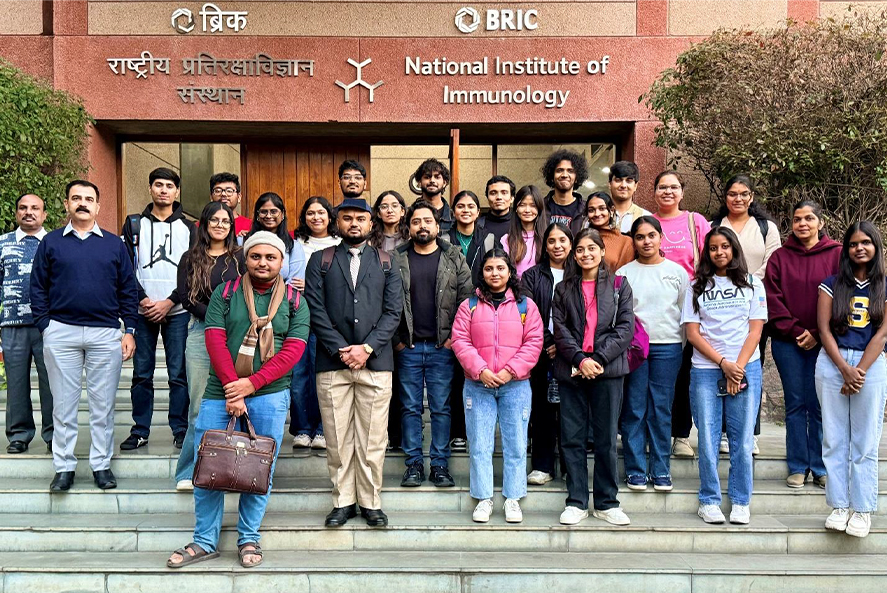
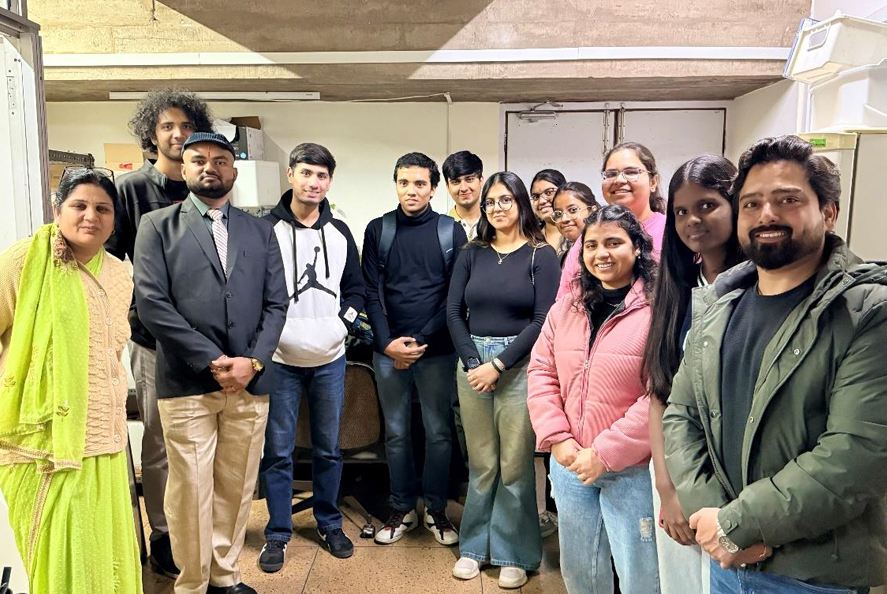
Industry Visit - BTech students visit National Institute of Immunology (NII) Delhi
Date: December 01 2025
Time: Whole Day
Venue: National Institute of Immunology, Delhi
Introduction
An academic industrial visit to the National Institute of Immunology (NII), New Delhi was organized for the BTech students of NIIT University on December 01 2025. The 23 students and 1 PhD scholar were accompanied by Dr. Utkarsh Raj, Associate Professor, Biotechnology & Bioinformatics Area. The objective of the visit was to expose students to real-world research environments, modern instrumentation, and contemporary technologies used in molecular and cellular biology.
NII is one of India’s most prestigious biomedical research institutes and the first autonomous institute established under the Department of Biotechnology (DBT), Government of India). It is renowned for cutting-edge research in immunology, molecular biology, infectious diseases, and advanced biotechnological applications.
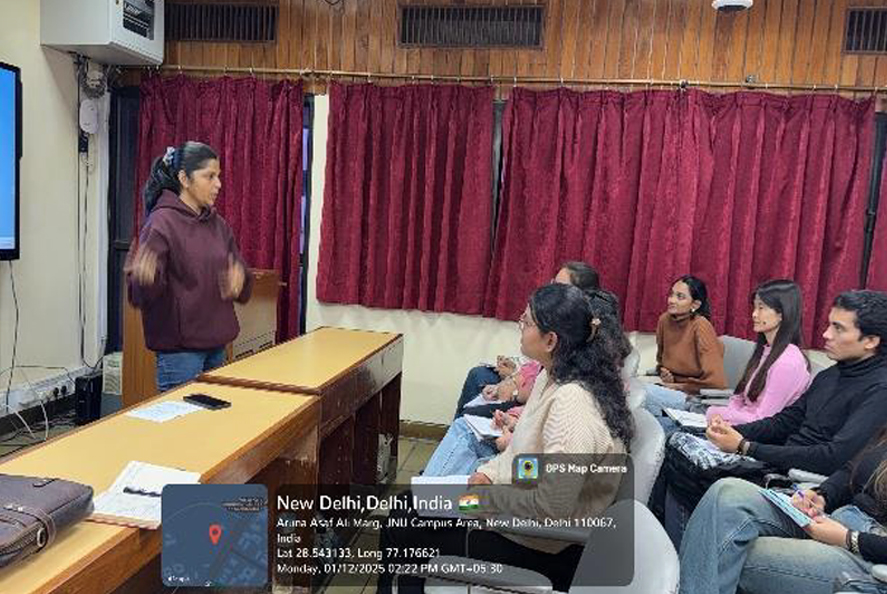
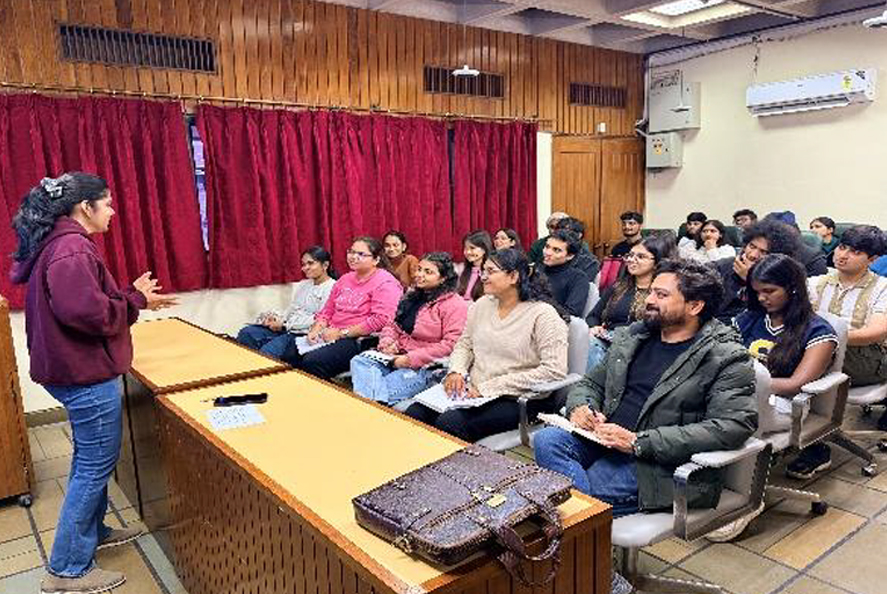
Introduction to NII – Session by Dr. Banyakar
The visit commenced with an introductory session led by Dr. Banyakar, who explained the vision, mission, and scientific contributions of NII.
Research Groups and Focus Areas
Dr. Banyakar described various research groups working at NII in the areas of:
- Immunology and host–pathogen interaction
- Cancer biology
- Reproductive biology
- Structural biology
- Molecular and cellular biology
- Vaccine development
- Genomics and transcriptomics
He highlighted how interdisciplinary collaboration among these groups contributes to innovations in disease diagnostics, therapeutics, and fundamental biological discoveries.
About BRIC
He also explained the formation of BRIC – Biotechnology Research and Innovation Council, a new umbrella structure under DBT. NII is now a part of BRIC, which integrates multiple DBT institutes to enable better coordination, resource sharing, and innovation in biotechnology. This strengthens national-level scientific development and research efficiency.
Next-Generation Sequencing (NGS) Facility – Demonstration by Mr. Pradeep (SRF)
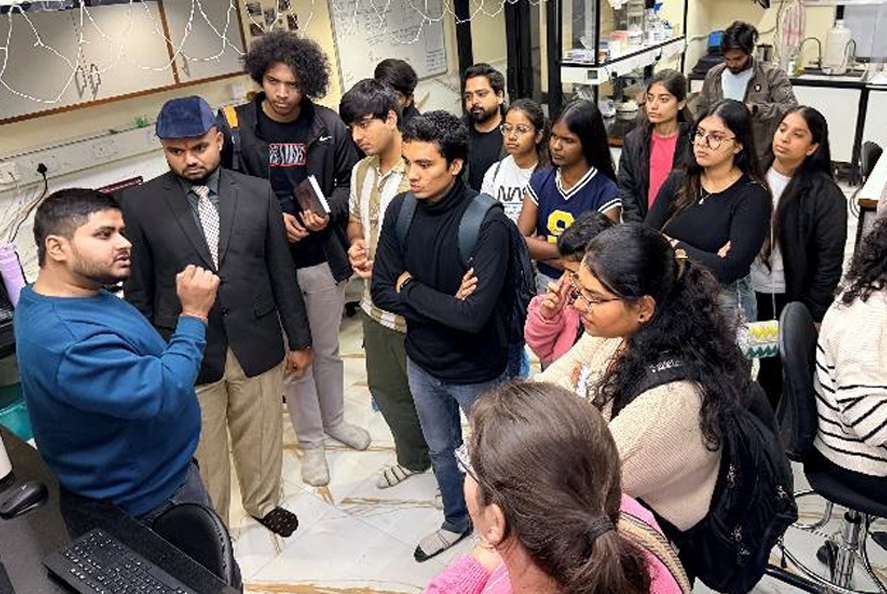
The students then visited the NGS facility, where Mr. Pradeep (Senior Research Fellow) provided a detailed session on modern sequencing platforms and applications.
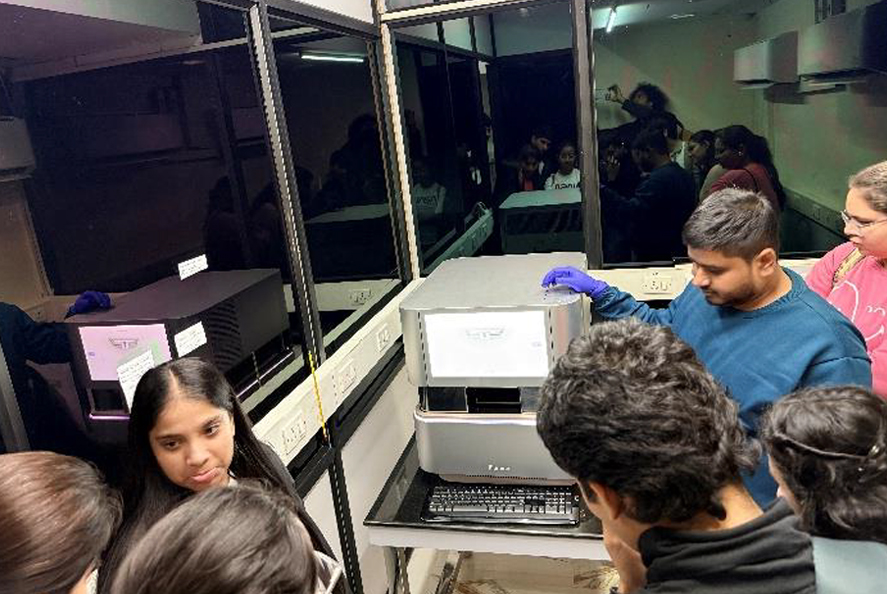
Illumina NextSeq 2000
He demonstrated the Illumina NextSeq 2000, a sequencing-by-synthesis technology and Oxford Nanopore MinION, a portable long-read sequencing device. Students gained insight into how short-read and long-read sequencing complement each other in modern genomic research.
Central Instrumentation Facility (CIF)
The students explored the Central Instrumentation Facility, where they observed:
- PCR and qPCR systems
- Gel documentation units
- Fluorescence and confocal microscopes
- High-speed and ultracentrifuges
- Spectrophotometers and analytical instruments
Technicians explained the working principles, applications, and safety protocols for each instrument.
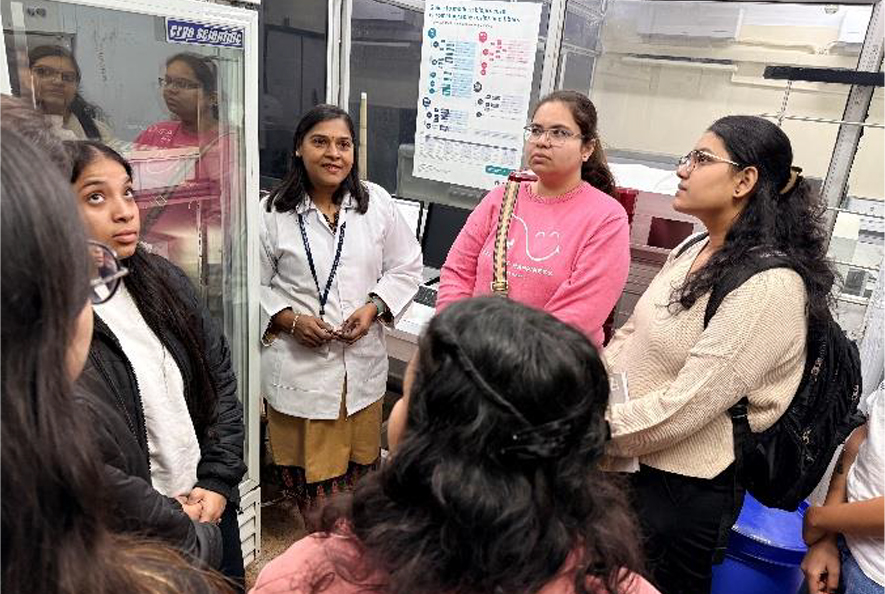
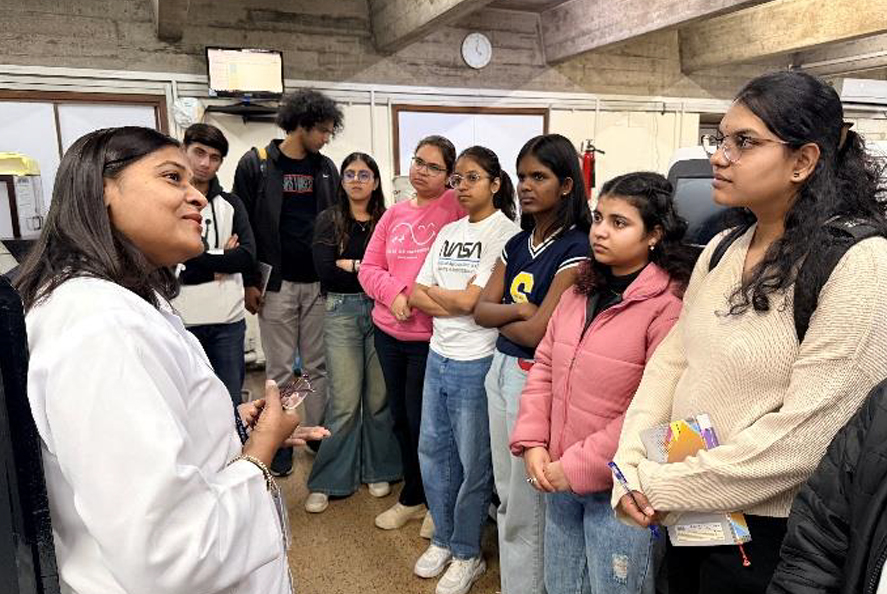
FACS Analyzer (Flow Cytometry Facility)
The Flow Cytometry Facility visit gave students exposure to Fluorescence-Activated Cell Sorting (FACS). This hands-on demonstration helped students relate theoretical concepts to real experimental workflows.
Learning Outcomes
Through this visit, students:
- Understood the functioning of advanced sequencing technologies like Illumina NextSeq 2000 and Oxford Nanopore MinION.
- Gained exposure to high-end laboratory instrumentation and research workflows.
- Observed real-world applications of immunology, genomics, and molecular biology.
- Learned about national-level research structures such as DBT and BRIC.
- Strengthened their interest and understanding of careers in biotechnology and biomedical research.
Conclusion
The industrial visit to the National Institute of Immunology was highly informative and enriching. It offered NIIT University BTech students valuable exposure to contemporary research technologies and laboratory practices. Under the guidance of Dr. Utkarsh Raj, Associate Professor, the visit successfully enhanced students’ practical understanding of biotechnology and inspired them to explore careers in scientific research.